Tyre swing
In the WoodsThe Tyre swing moves from the ordinary world of children’s play into the darker landscape of Rob Ryan’s memory. Seen first among the games of an August afternoon in Knocknaree, it returns later as a frayed remnant at the edge of the crime scene, where its worn material prompts Rob to recognize the child he had believed he had left behind.
Early Use in Knocknaree
On Tuesday, 14 August 1984, twelve-year-old Peter Joseph Savage, Germaine Elinor Rowan, and Adam Ryan were seen playing around the road where their homes stood in Knocknaree, County Dublin. During the afternoon they balanced along the wall, rode their bicycles, and swung on a tire swing. These were familiar surroundings and familiar pastimes: the children often went into the adjoining wood, and knew that part of it well.
At about three o’clock, the three left their bicycles in the Savages’ front garden and told Peter’s mother they were going to play in the wood. The swing thus belongs to the last account of their afternoon before they crossed the wall and disappeared. In its first appearance, it is not ominous or exceptional; it is one detail in a day witnessed by neighbors as unremarkable children’s play.
The Worn Remnant
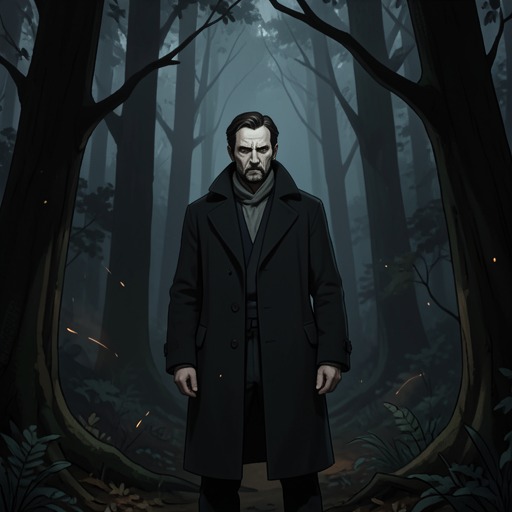
Years later, after standing on a ridge above the scene of a girl’s death, Rob surveys the surrounding trenches, houses, fields, access points, and alignments. Along the estate wall, a thin rim of trees has been left untouched. On one branch he notices a broken piece of blue plastic rope, heavily knotted, with a couple of feet dangling. The rope is frayed and mildewed, and at first its appearance suggests sinister histories such as a lynching or a midnight suicide. Rob recognizes it instead as the remnant of a tire swing.
That recognition changes the object’s significance without changing its worn condition. The rope can look like evidence of violence, but Rob identifies it through his knowledge of the children’s play. The swing does not explain what happened in the wood; it makes the ordinary past materially present at the edge of the later crime scene.
Memory and Significance
The swing also gives physical form to Rob’s recovered sense of himself as a child. Though he had come to think of the Knocknaree events as belonging to someone unknown, he recognizes that some part of him had remained there. He recalls a child spinning on the swing, scrambling over the wall after Peter’s bright head, and vanishing into the wood with the other children. The sequence binds the object to movement and separation: the swing belongs to play just before the wall is crossed and the children vanish from the world of the estate.
Rob had once understood himself as the boy who was carried safely home while Peter and Germaine were taken away. His later recognition overturns that distance. He concludes that, in a sense too consequential to be merely metaphorical, he never left the wood. The Tyre swing is not a solution to the disappearance, but its weathered trace helps expose the limits of that supposed escape: the child who played there remains part of the adult who returns.